Your utility meters never stop running. But if you look closely at your monthly statement, you will likely find a silent margin-killer hiding in plain sight: demand charges.
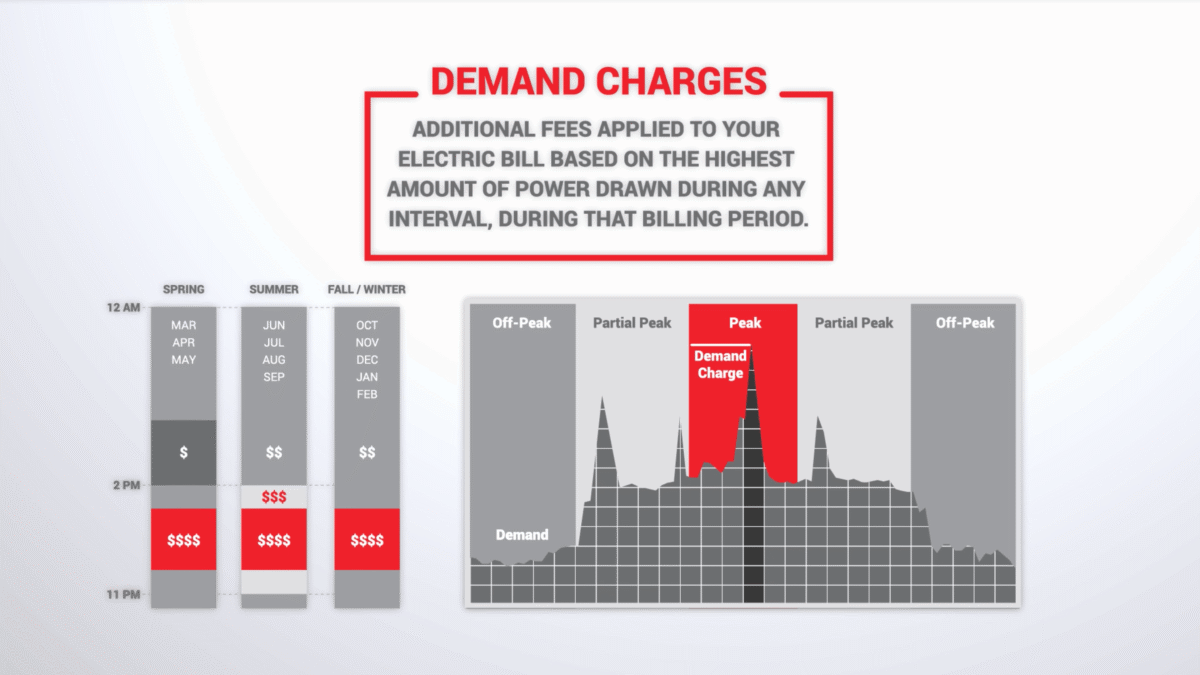
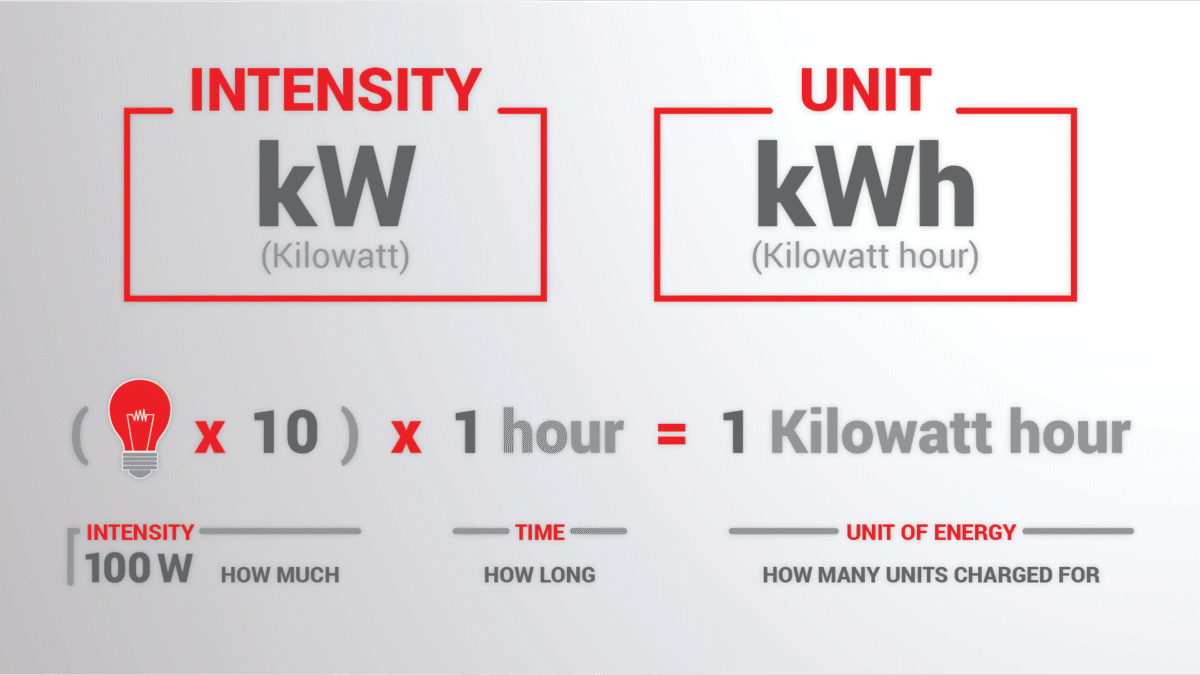
According to the National Renewable Energy Laboratory (NREL), demand charges typically account for 30% to 70% of a commercial customer’s utility bill. Major utility companies do not just charge for the total energy you consume – they penalize you heavily for the maximum intensity of your usage.
You have 10 other fires to put out today, so let’s skip the fluff. Here is how sharp operators are combining commercial solar with battery energy storage to cut these charges, and why the rapidly approaching July 2026 tax deadline requires immediate attention.
The Peak Demand Charge Penalty
Demand charges act like a penalty for your busiest 15 to 30 minutes of the month. If your heavy equipment spikes your power draw for even a fraction of an hour, the utility company charges a premium to guarantee that capacity remains available on the grid. It does not matter if your facility’s usage drops to zero for the rest of the day.
Many businesses install commercial solar to reduce total energy consumption, which is highly effective. However, solar has a timing problem. If a thick cloud passes over right as your machinery cycles on, or if your peak demand hits after 5:00 PM when the sun is low, your solar panels cannot prevent the resulting demand spike.
The Solution: Energy Storage
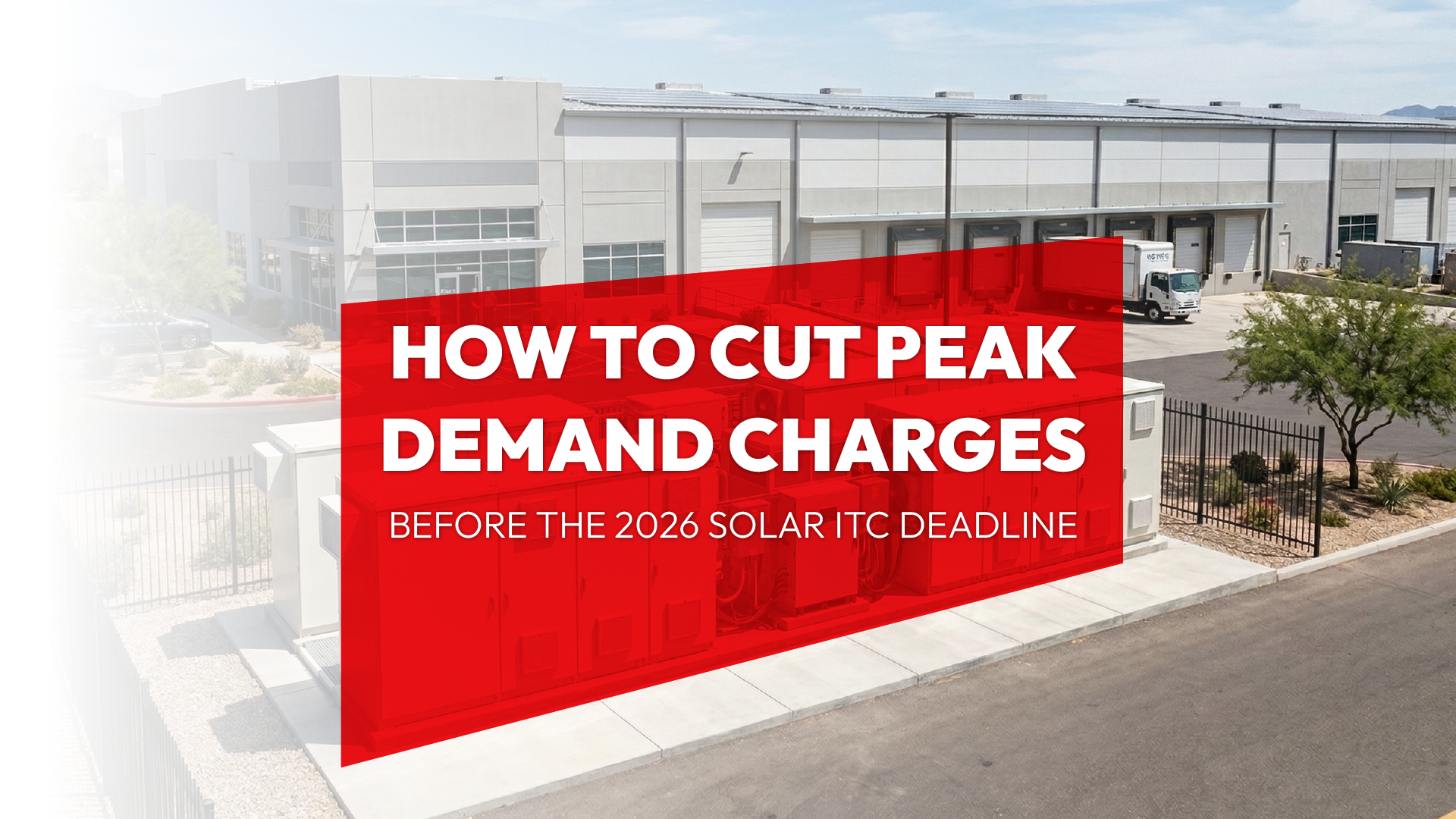
This is where a Battery Energy Storage System (BESS) becomes a highly effective financial tool. Modern commercial batteries use smart software to learn your facility’s load profile and anticipate demand spikes before they happen.
When the system detects your power draw approaching a costly utility threshold, it instantly dispatches power from the batteries. This process, known as “peak shaving,” flattens out the peaks in your usage. The batteries then recharge when grid rates are low or when your solar panels are producing excess power.
The Closing “Certainty Window”
The physical hardware is only half the strategy. For owner-operators and corporations with taxable income, the financial engineering behind solar and storage relies heavily on federal tax policy.
Right now, we are inside a critical window for financial certainty, but the clock is ticking loudly. Under current law, businesses must start construction by July 4, 2026, or place the system in service by December 31, 2027, to remain eligible for the full Investment Tax Credit (ITC) and bonus depreciation.
By safe-harboring a project before this fast-approaching deadline, businesses can secure a highly lucrative tax structure:
- The Base ITC & Adders: Eligible projects secure a base federal tax credit of 30%, with potential adders pushing the total credit up to roughly 50%.
- 100% Bonus Depreciation: This allows businesses to deduct the depreciable basis in year one, transforming a large capital expenditure into a powerful cash-flow tool.
- Supply Chain Compliance: Projects that miss the deadlines and use imported materials from “foreign entities of concern” will be disqualified entirely from these incentives.
What to Do Next
When properly structured, these federal incentives can deliver a year-one tax benefit equal to more than half the project cost, before factoring in decades of reduced utility expenses. Waiting to see what utility rates do next year is a losing strategy. By acting before the mid-2026 deadline, you can shield your operating margins from rate hikes while turning a near-term tax liability into a long-term, income-producing asset.
Disclaimer: Not tax advice. Confirm eligibility with your tax advisor.
Get your free energy and tax analysis. Curious what the exact numbers look like for your facility? Connect with a Revel Energy specialist to see a customized breakdown of your potential system size, demand charge reduction, and eligible tax incentives.
ROOFTOP SOLAR
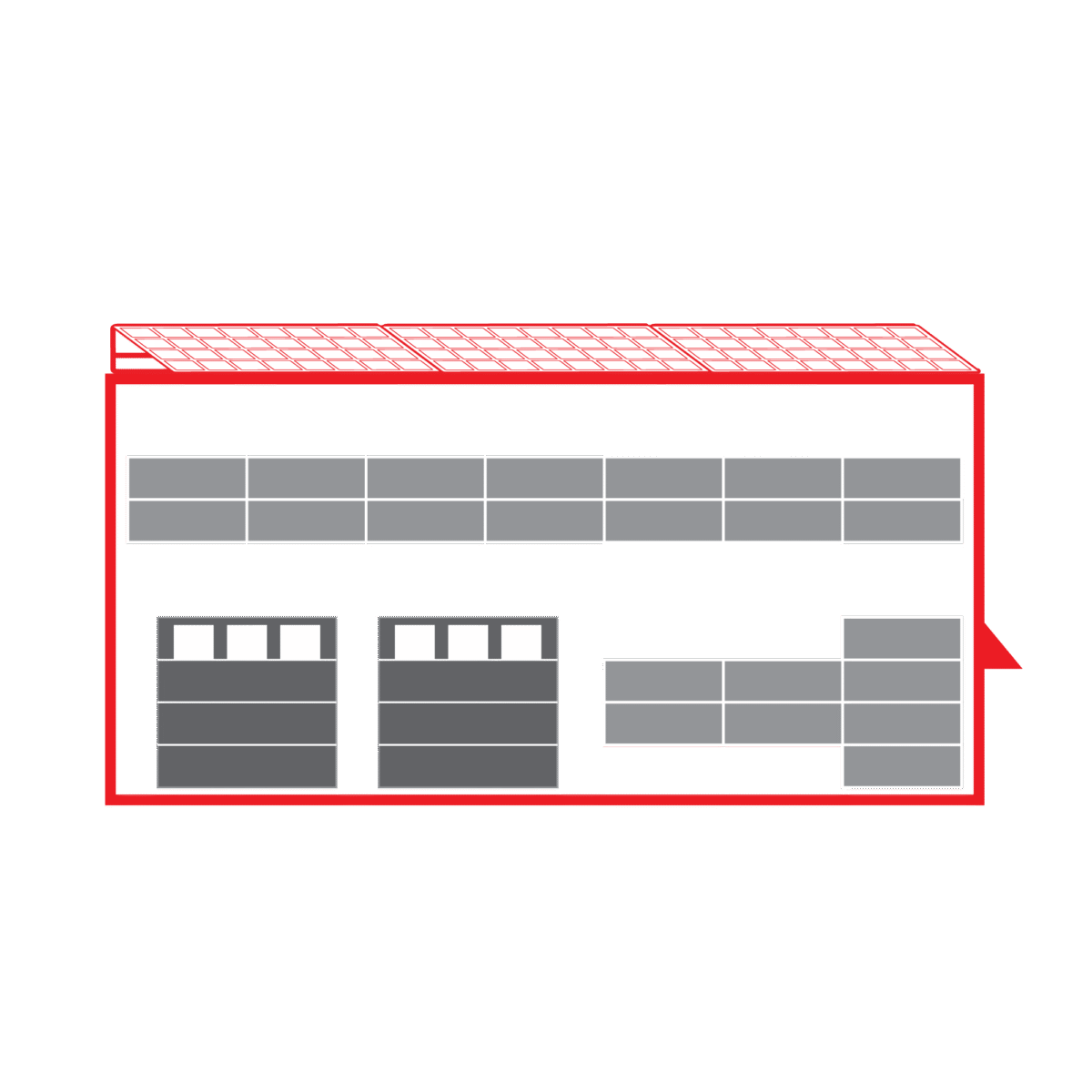
Commercial grade rooftop solar is ideal for: manufacturing, warehousing, logistics, industrial, retail, hospitality buildings and more with over 10,000 sq. ft. rooftops.
CARPORT SOLAR
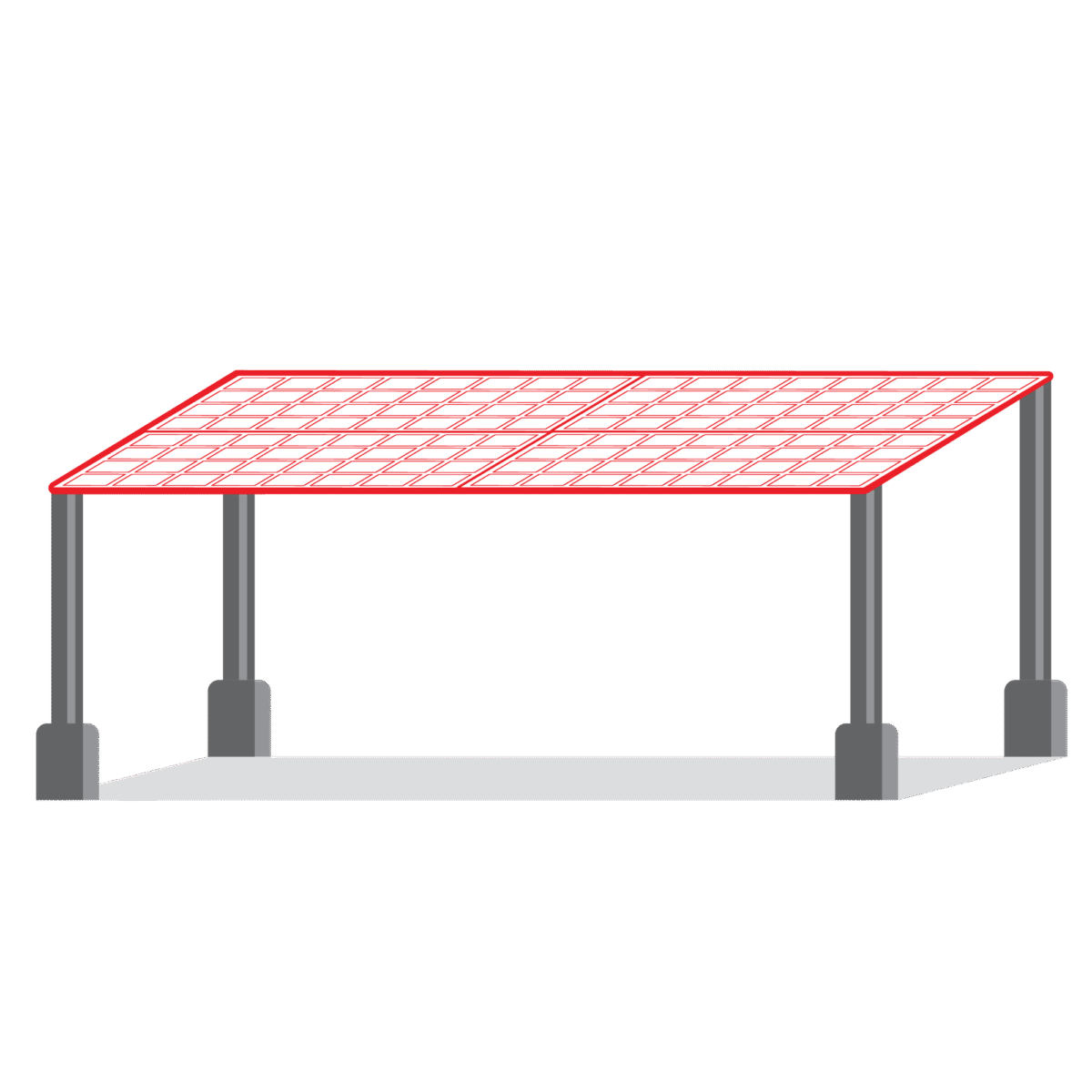
Free standing carport solar generates added solar power for properties with limited rooftop space. Added benefits include shading and protection for employees vehicles.
ENERGY STORAGE
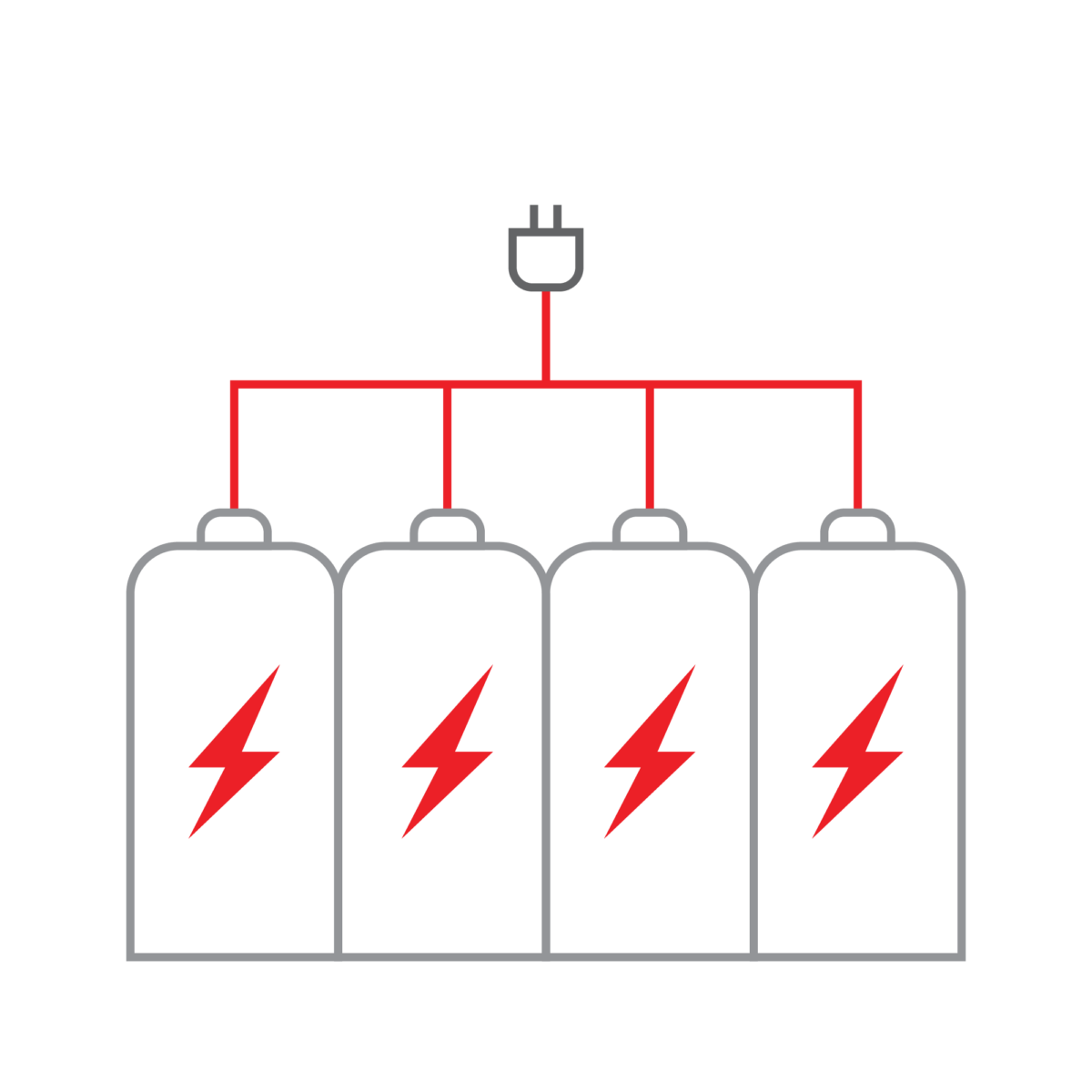
Crucial for reducing peak demand charges. Automated to supply electricity when your panels won’t. Energy storage is ideal for businesses that incur significant peak charges.
EV CHARGING STATIONS
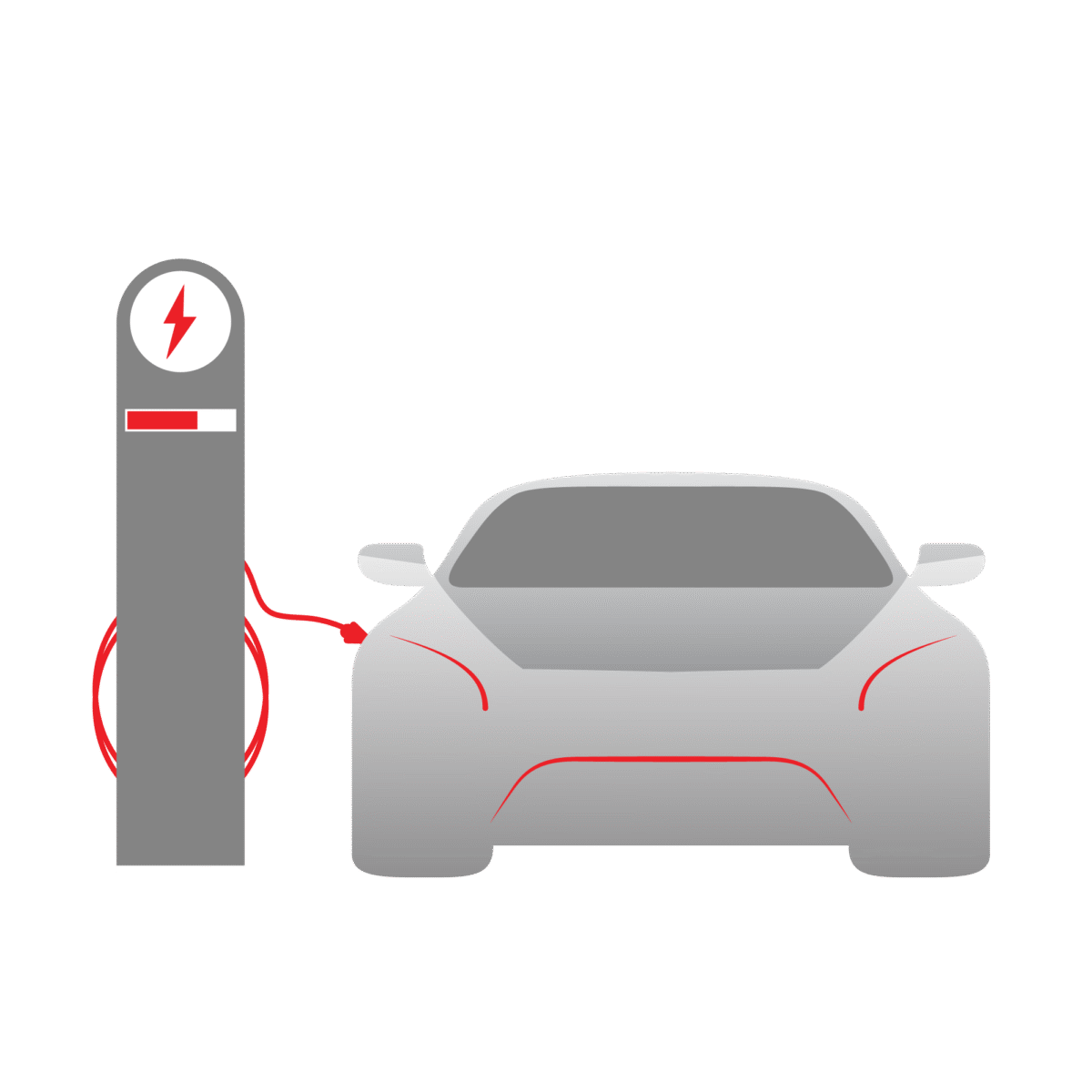
As the popularity of EVs increase, so does the demand for on-site EV charging stations. This sustainable amenity has become a parking lot fixture for employers.
CREATING CAPITAL THROUGH SUSTAINABILITY, WE OFFER:
PROFESSIONAL GUIDANCE
CUSTOM TAILORED PLANNING
ENGINEERING, PROCUREMENT, CONSTRUCTION & INSTALLATION
CSLB #1106092
Client Testimonial: Kelemen Company
Corporate Business Park in Irvine, CA has created significant electricity cost savings through commercial solar installed across the 5-building business park.
Client Testimonial: Tice Gardner & Fujimoto LLP
See how this CPA firm saved on electricity and gained valuable tax credits through commercial solar that they used to keep cash in the businesses.